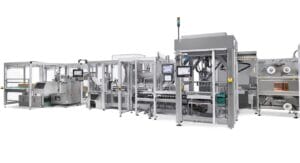
With forward-looking and proactive obsolescence management, plant performance can be maintained for decades without jeopardising production.
Technology providers are constantly removing system components from their portfolios. This also means that food manufacturers have to react with short-term adjustments. However, there is another way: with forward-looking and proactive obsolescence management, plant performance and staying ahead of the cureve can be maintained for decades without jeopardising production.
In order to cope with the high production pressure in the industry, efficient systems are needed that are always state-of-the-art. But how can the necessary modernisations be carried out as quickly and cost-effectively as possible? The key lies in forward-looking obsolescence management, as the latest project between Syntegon and Gropper shows. Gropper has been synonymous with foresight and customer proximity since 1929. What began more than 90 years ago as a cheese factory is now a successful medium-sized company with more than 900 employees. Although the company name rarely appears on the label, the private label specialist is always present: its dairy products, direct juices, smoothies and water can be found in supermarkets throughout Europe.
Cost pressure and short time frames
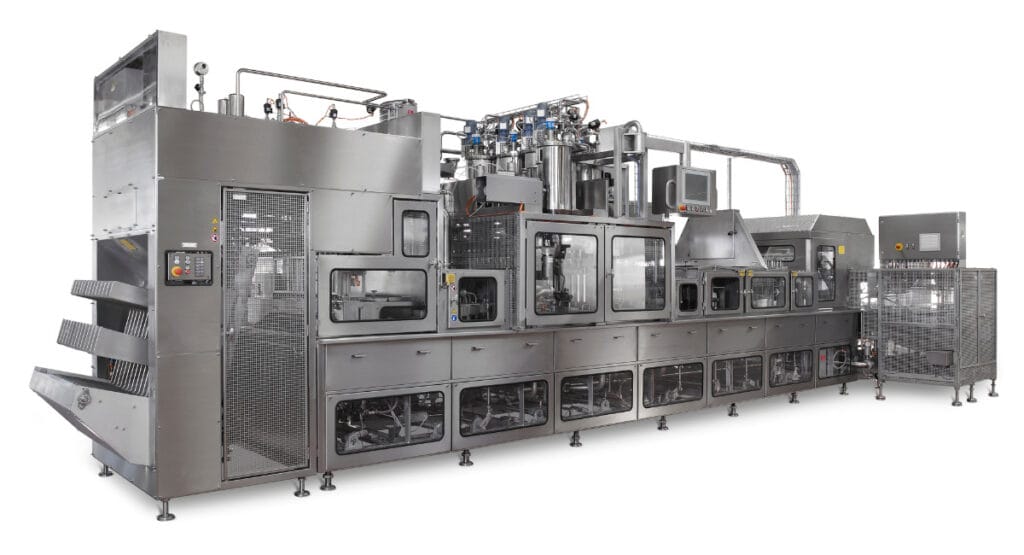
It took Gropper just seven days to replace the control electronics of an ultra-clean bucket line. (Image: Syntegon)
Gropper produces in large quantities. Almost 270 million litres of conventional milk and around 81 million litres of organic milk are processed each year. At its main site in Bissingen in northern Swabia, the company produces on seven cup lines, five bottle lines and one gable top carton line. The products are mainly sold in German discounters – an industry with very high-cost pressure. Long downtimes are not possible with the volumes required. In addition, there are only very short windows of opportunity in spring or autumn to modernise systems. To ensure that Gropper products remain a permanent fixture on the refrigerated shelves of discounters and to be able to resume production as quickly as possible, the company relies on efficient processes.
This is also the top priority for Helmut Weissenbach, Project Manager at Syntegon. Modernisation is an integral part of everyday production for his customers in the food industry. It is often not the fault of the plant manufacturers themselves that certain parts need to be replaced. They are also dependent on suppliers, for example for components for the control electronics. This is what happened in the most recent case: The machine manufacturer was informed by Schneider Electric (SE), from whom Syntegon purchases the control technology for its filling machines, that components for the control electronics of certain systems will no longer be available from 2024.
Saving time and costs thanks to experience
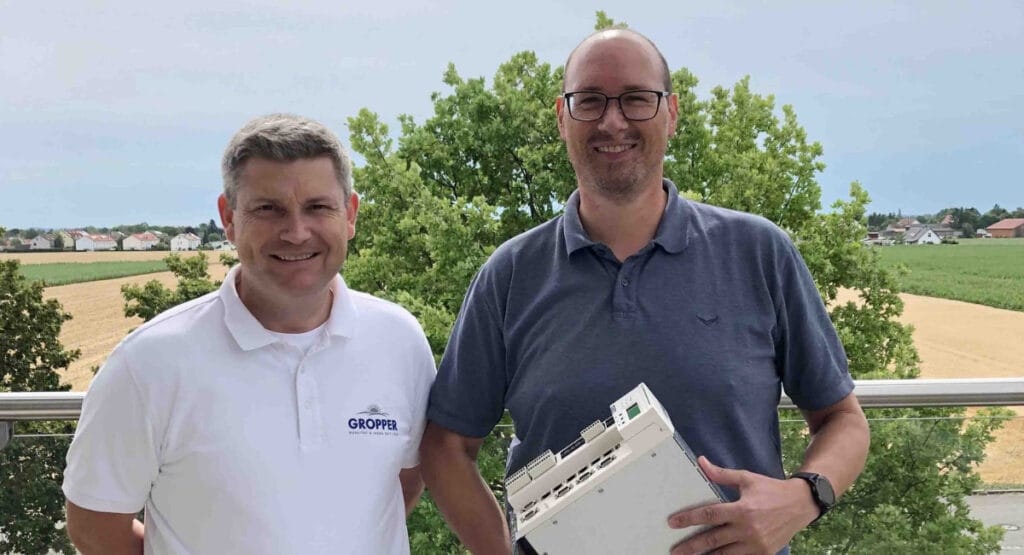
Experts in obsolescence management: Claus Mayr from Gropper (left) and Helmut Weissenbach from Syntegon.
(Image: Gropper)
Instead of waiting, Weissenbach and his colleagues immediately set about looking for a modernisation solution that would require as little time and material as possible and thus ensure that customers would continue to be reliably supplied with the relevant control components. Gropper also operates one of the affected systems, which Syntegon had recently successfully modernised at a competitor. The experts were able to use the experience gained from this pilot project to implement the modernisation at Gropper even more efficiently.
Claus Mayr, Deputy Head of the Filling and Packaging Technology Project Planning Department at Gropper, welcomes this proactive approach. Both companies have been working together for many years. The machines, requirements and challenges are therefore well known. Accordingly, Mayr once again turned to Syntegon for the modernisation of the eight-lane cup line in question in the ultra-clean version and looks back on the project with great satisfaction:
„The modernisation of the first cup filling machine was not only completed faster than planned. In addition to the control technology, the machine’s filler was also overhauled within the same time frame. Time and financial savings therefore went hand in hand.“
The new control system in seven days
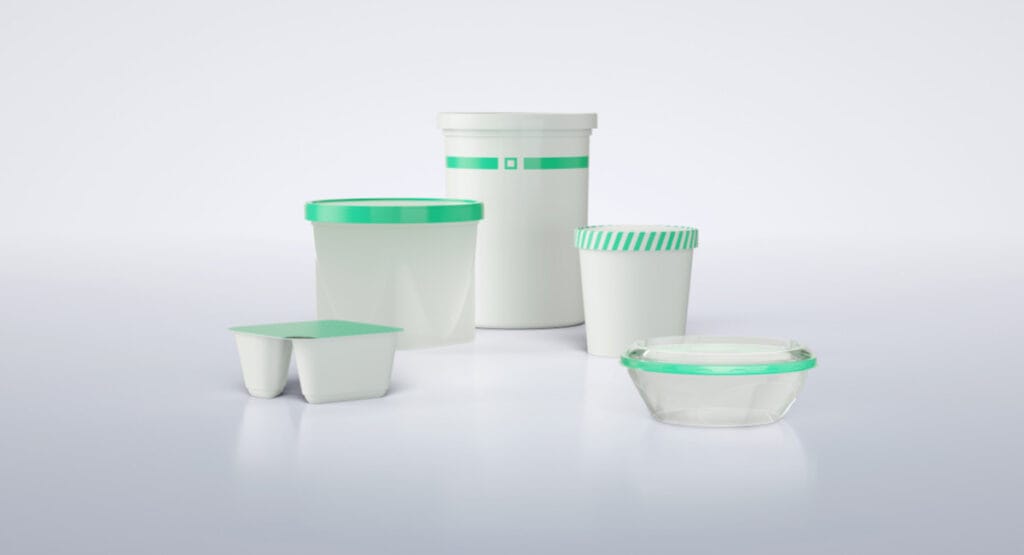
Every year, almost 270 million litres of conventional milk and around 81 million litres of organic milk are processed and bottled in various types of packaging. (Image: Syntegon, Gropper)
Thanks to the previous pilot project in the milk processing industry, Syntegon was able to draw on a wealth of experience and optimise the processes. The replacement of the control electronics and the overhaul of the canner were carried out by experienced experts. The result is impressive: The new control system was installed in just seven days. The modernisation went so smoothly that Gropper did not need any additional production support from a programmer on the last day of the project. After commissioning, the cup line immediately achieved the usual output rate, meaning that no efficiency run was necessary. The subsequent count reduction test in the test laboratories to determine the germ count also showed that the germ reduction functioned perfectly in accordance with the ultra-clean filling requirements.
Equipped for the future
With this project, Gropper has positioned itself well for the future in more ways than one: The private label specialist now has control technology in stock again so that components can be replaced quickly if necessary and production downtimes can be minimised. The team was also able to pick up some know-how during the modernisation process. The employees also completed a one-day training course so that they can easily replace motors or controllers and carry out motor referencing themselves in future.
The next project planned is the modernisation of another filling line in Bissingen: By 2026, Gropper wants to convert all machines to the new control technology with the active support of Syntegon. This will provide the company with planning and production security for the coming years. Short-term obsolescence and modernisation will be a thing of the past, and the high production volumes can also be optimally fulfilled in the future.
Packaging for decorative cosmetics is very special. The Forum Rezyklat calls for the recyclability of packaging to be taken into account when designing it.