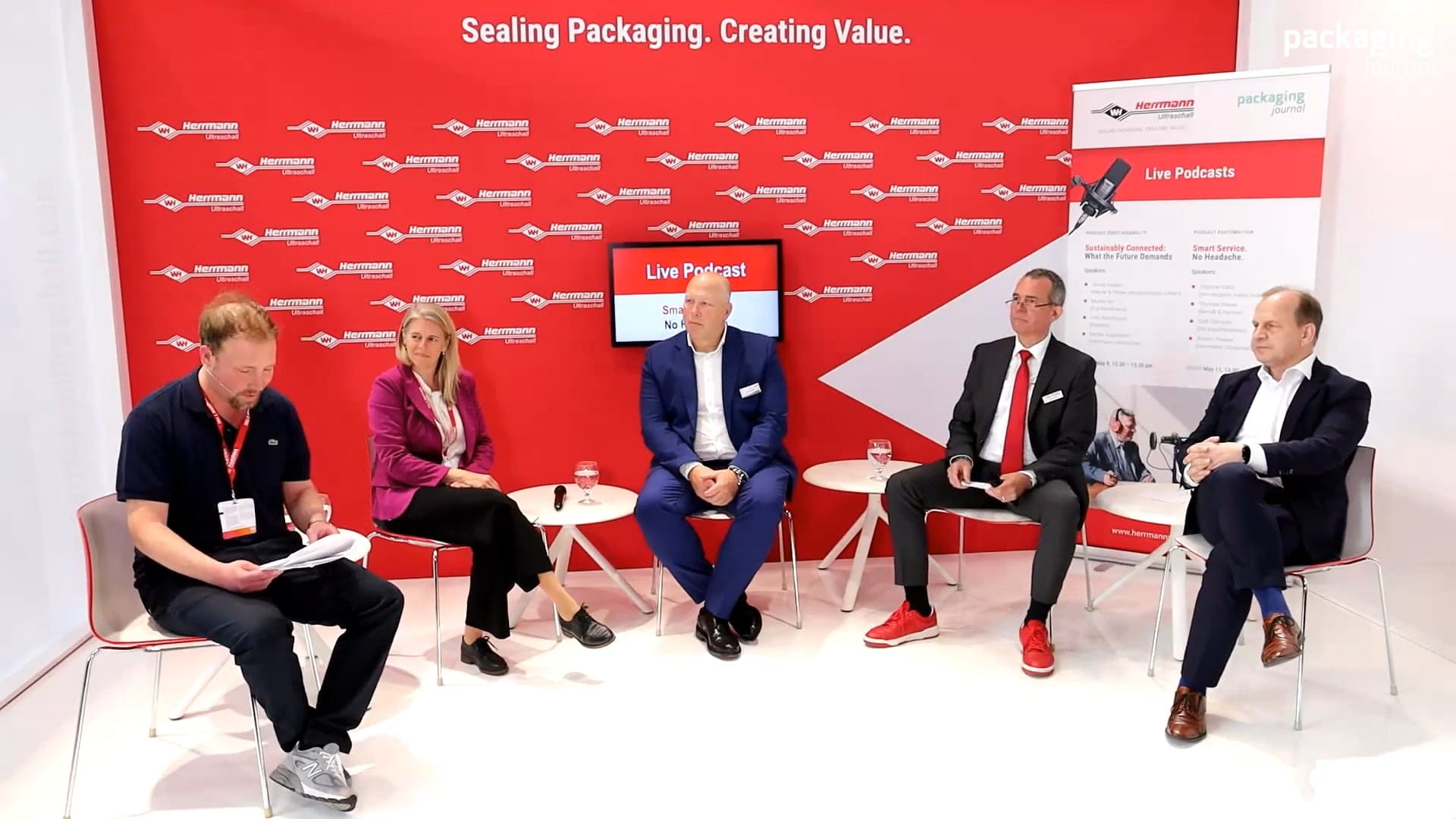
At interpack 2026, Lennart Laakmann of Pilz explains the central role of the EN 415 standard for machine safety in the packaging industry. With more than 1,200 pages, the standard covers every area from primary packaging through to end-of-line — and stays the single most important reference for anyone building or operating packaging machinery.
The pyramid of safety standards
The standards hierarchy is structured in three levels. A-standards such as ISO 12100 define general risk assessments, B-standards specify safety systems, and C-standards such as EN 415 cover concrete applications. “If you’re compliant with the requirements of EN 415, you’re automatically compliant with ISO 12100 and with the Machinery Regulation,” Laakmann explains.
That alignment is what makes the standard so valuable in practice. Instead of working through the entire compliance chain separately, manufacturers and operators get a single, application-oriented framework that already incorporates the higher-level requirements — and that has been written specifically with packaging machinery in mind.
Cybersecurity arrives on the shop floor
From January 2025, the new Machinery Regulation replaces the previous Machinery Directive. The decisive difference: “You have to protect your safety against security threats — it’s about protection from corruption,” the Pilz expert emphasizes. In November, the Cyber Resilience Act adds another layer of obligations. Together, both pieces of legislation pull cybersecurity firmly into the scope of machine safety.
EN 415 itself remains the structural backbone. Packaging machines combine mechanical risks from moving parts, thermal hazards from heat sealing, and further dangers across the line. The standard categorizes them by application area: form-fill-seal machines in chapters 2 and 3, secondary packaging such as shrink-film systems in chapters 5 and 7, palletizing in chapters 4 and 6 — giving every machine type a clear point of reference.
Compliance as a business advantage
Pilz delivers TÜV-certified solutions such as the SafeguardBox for carton infeed systems. “You only have to install our solution with our controller and sensor in your machine — and the carton infeed solution is safe,” Laakmann explains. Pre-engineered safety packages of this kind translate complex standards into something machine builders can actually buy off the shelf.
Safety standards reduce not only legal risk but also raise productivity, because well-designed safety concepts cut downtime and rework. Laakmann’s recommendation: “Talk to our experts. They do everything for you.” With the Machinery Regulation and the Cyber Resilience Act on the horizon, the years ahead bring new obligations — and the companies that engage proactively will gain a real competitive edge over those that wait.
(Photo: Messe Düsseldorf / Tillmann)