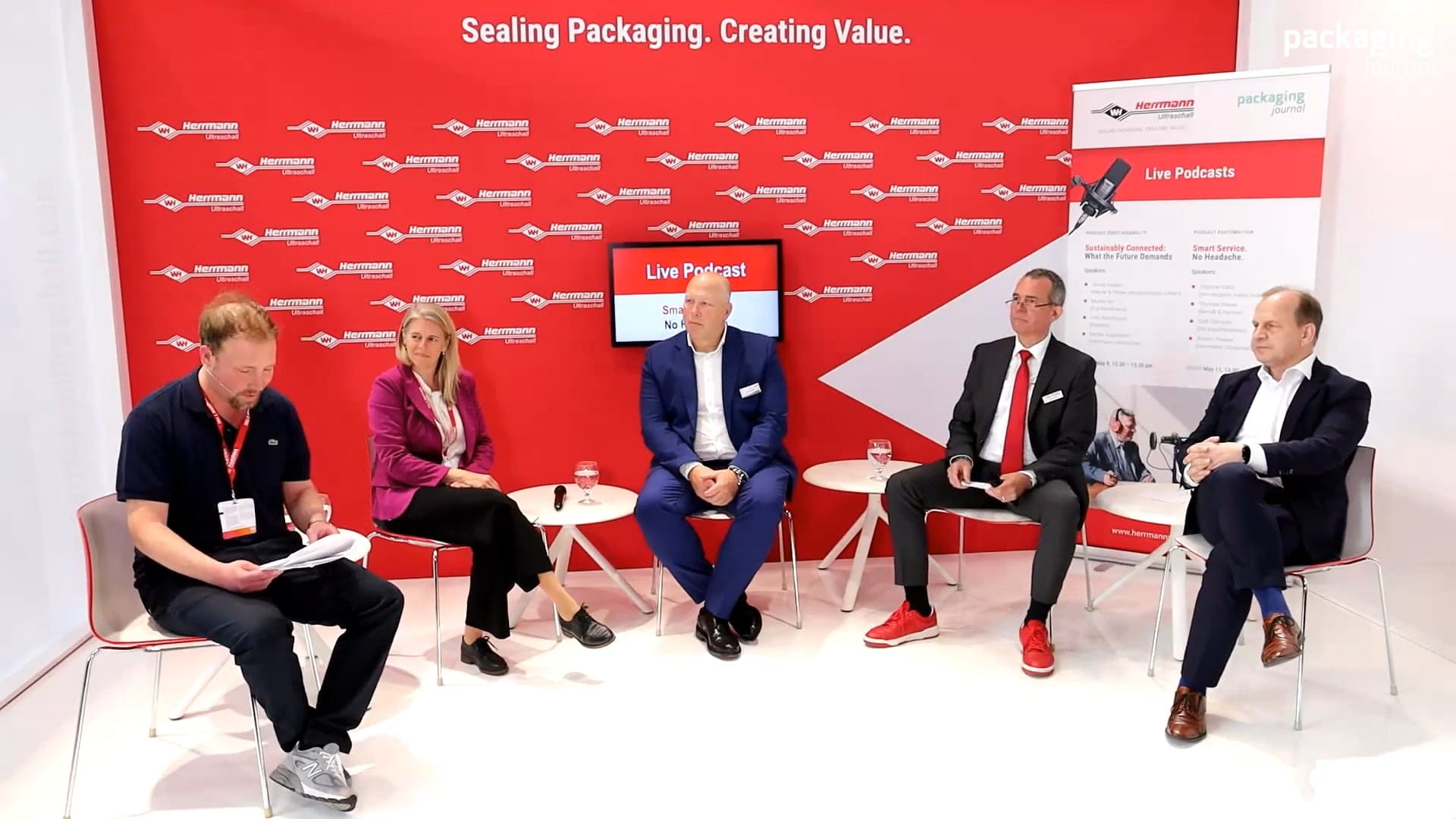
At interpack 2026, Dr. Johannes Bergmair, General Secretary of the World Packaging Organisation (WPO), draws a notable conclusion: what counted as innovation just a few years ago has become a basic requirement. Recyclability is shifting from a unique selling point to a minimum standard.
From innovation to industry standard
The partnership between interpack and WPO, formalized in 2024, is already bearing fruit. âItâs simply natural that we work together. interpack is the one global trade fair, the meeting point for packaging technology worldwide,â Bergmair explains. A core project is the Safe Food Initiative, which raises awareness of packaging as a solution to food waste rather than a contributor to it.
The World Global Packaging Awards 2026 honoured 234 winners from 36 countries â and the submissions reveal a clear shift. âRecyclability is no longer a standout feature, but a must-have,â Bergmair observes. Companies now mention recyclability almost as a given and put the spotlight on additional innovations such as recycled content or specific functional improvements.
An industry battling its own image
Despite enormous innovation power, the packaging industry continues to struggle with its public perception. âGo out on the street and ask people about packaging â they say: oh, thatâs waste, thatâs bad,â Bergmair describes. What the public tends to overlook is the technological progress: âIf you had asked me five years ago whether we would ever have recyclable laminate structures for coffee packaging, I would have said no. But theyâre here.â
The European Packaging and Packaging Waste Regulation (PPWR) adds another layer of pressure. âIf I want to design a packaging system for 2030 or 2031, I need to fix it now. But the guidelines on recyclability wonât be published until 2028 or 2029,â Bergmair points out. Companies are forced to commit to designs while the rulebook is still being written.
Confidence in the industryâs problem-solving role
Despite geopolitical uncertainties, Bergmair looks ahead with optimism: âThe packaging industry is resilient. As long as we produce, we will need packaging.â That structural demand isnât going away â whatâs changing is the bar around how packaging earns its place.
The bigger task, in Bergmairâs view, is communication. The industry needs to step forward more confidently and frame its role as a problem solver â for food safety, for waste reduction, for circularity â rather than letting the public conversation reduce packaging to a synonym for waste. The award-winning innovations on display at interpack 2026 give the industry plenty of material to make that case.